
Introduction
The revival and development of traditional medicine in Mongolia, in all its branches, began in 1990. Since then, we started to collect and study ancient books on traditional Mongolian medicine, Chinese traditional medicine, Indian Ayurvedic medicine, Tibetan medicine, and ancient European medicine written in Mongolian script, old Mongolian script, and Chinese, Tibetan, Manchu, and Russian, or translated from these languages. Among these, scholars have found manuscripts whose text and treatment methods are recorded in clear Mongolian script (Another form of ancient writing based on the Uyghur Mongolian script). A careful reading of this book revealed that the words were very ancient, the treatment methods were systematic, and there was little theoretical understanding. Most of the unfamiliar words were written in the pronunciation of the ancient Oirats. Some of these words were of Arab, Persian, Sartuul (Huihui in Chinese), and Khoton (Mongolian people of Turkic descent) origin. In Mongolia, the Sartuul and Khoton are ethnic minorities that follow the Islamic faith. Therefore, we explored to determine when and by whom this book was written, its content, and the direction of medicine.
Methods
In this narrative review, “The Healing Charm of Blue Ram” (The Healing Charm of Blue Ram, n.d., pp. 1-41) was examined and is believed to have been composed at the beginning of the 13th century. It incorporates Islamic medical knowledge. We conducted a historical study that arranged the texts chronologically by publication year, analyzing their themes and terminologies from the earliest to the latest. This allowed us to compare their content—specifically special, innovative, and creative ideas—with those found in other traditional medical texts.
Size of the Book, Time of Writing
“The Healing Charm of Blue Ram” (The Healing Charm of Blue Ram, n.d., pp. 1-41) is a manuscript written in clear Mongolian script. A book with a total of 41 pages, written in black ink on Chinese muutuu paper, measuring 22 cm x 11 cm (The Healing Charm of Blue Ram, n.d., pp. 1-41). The first page with the title is unnumbered, while the subsequent page begins at 1 (Figure 1).
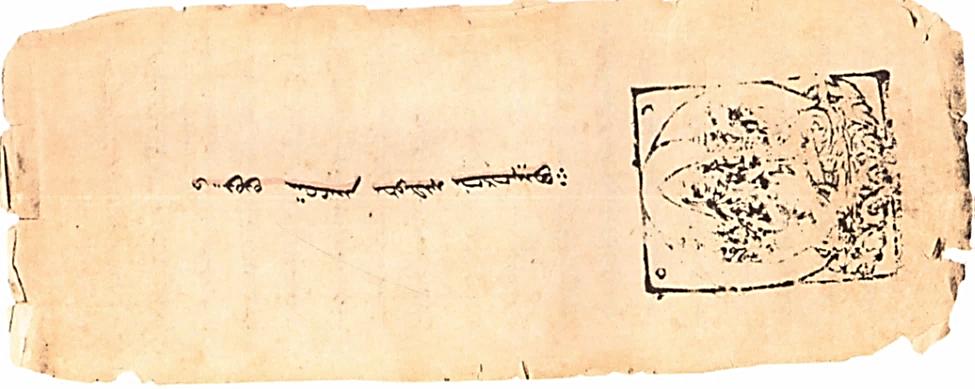
Figure 1. The title of “The Healing Charm of Blue Ram,” an ancient medical book (It is kept in Bold Sharav’s personal library)
Lines ten to thirteen on page 38 of the book state that Chinggis Khaan ordered Chagatai Khan to send medical books from his country (The Healing Charm of Blue Ram, n.d., pp. 38), (Figure 2). It is believed that he ordered Chagatai to send medical books to him shortly after the founding of the Chagatai state in 1225, possibly because Chinggis Khaan was feeling ill. Therefore, we assume that the date of sending the book to Mongolia was around 1225-1226, as the Chagatai state was founded in 1225, and Chinggis Khaan passed away in 1227 (Purevsuren, and Bold, 2005, p. 80). The order must have been issued before his death.
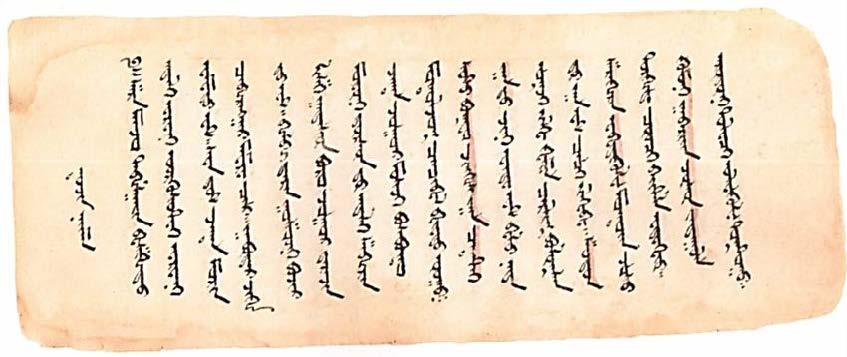
Figure 2. Page 38 of “The Healing Charm of Blue Ram,” an ancient medical book (It is kept in Bold Sharav’s personal library)
Facts Related to Islamic Medicine in the Book
Certain words, medicinal plants, and the name of the country in “The Healing Charm of Blue Ram” are of Uyghur, Turkic, Arabic, Khoton, and Oirat origin. Notably, the term Khoton is mentioned frequently. This group is a Muslim population of Uyghur origin. It is believed that the Khotons settled in Mongolia around 1690, where they began to grow vegetables and live by farming. According to the 2010 census, 11,304 Muslim Khotons were residing in Mongolia (Buyanbadrakh, 2012). We selected and explained the following words, which may have Turkic, Arabic, Khoton, or Uyghur origins. It should be noted that some ancient vocabulary in the text was unreadable, which may have affected the accuracy of the conveyed meanings. In our explanations, we first provided the Mongolian pronunciation, followed by the Latin transcription, and finally, the English translation. These include:
1. Авдал – (Abdal) – Ginseng
2. Авла хожийн эмнэлэг – (Avla hoji emneleg (Avla hastane) -Avla hoji Hospital
3. Алих – (alikh) - el ayası – palm
4. Архи – (arajhi. Tu. from Ar.) - distilled liquor
5. Хашиг – (qashiq. Tu.) – spoon
6. Лошодор – (loşodor) - a type of stone
7. Маажм тос – (mäskä. Tu.) - refined liquid butter
8. Мэха (Хотон) – (mahe. Uyg.) - Ginseng
9. Сулайман – (Sulaiman) - Derived from the Arabic word salaam, meaning peace, Sulaiman epitomizes a name rich in peaceful connotations.
10. Улир – (ulir) - snow cock
11. Умш – (umsh) – pasta
12. Халбүүр (hulba. Ar.) – fenugreek
13. Хотон – (Khoton) – Uyghur
14. Хотон яр өвчин – (Hoton yar üvchin) - Uyghur ulcer disease
15. Хурмаш – (hurmash) - left shreds
16. Шөл – (shilön. Tu.) – soup
17. Элээдшиг – (eleedshig) - grown-up and so on (The Healing Charm of Blue Ram, n.d., pp.11,5,8,9,5,7,1,11,7,2,5,12,7,7,12,16,9). The vocabulary list is arranged in alphabetical order in the Mongolian language (Figure 3).
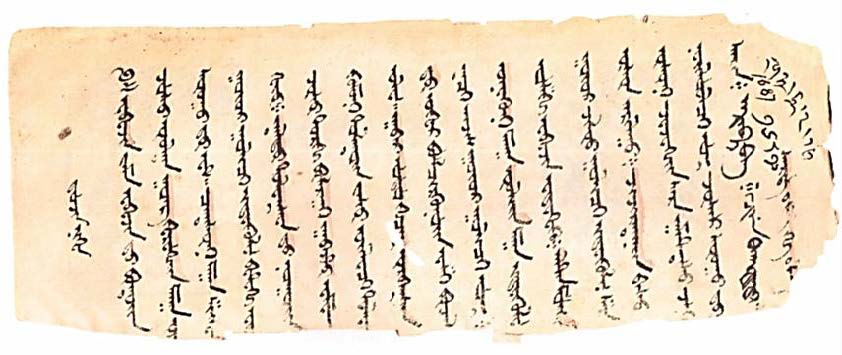
Figure 3. The final page 41 of “The Healing Charm of Blue Ram,” an ancient medical book (It is kept in Bold Sharav’s personal library)
We aimed to list and explain these words based on “The Healing Charm of Blue Ram.” Numerous additional words will be addressed in the future. Generally, it is hypothesised that many words related to medicine have entered the Mongolian vocabulary through Arabic, Turkic, Uyghur, and Sartuul among the Western Mongolians.
Book Content and Treatment Methods
It is believed that the introduction of this book to Mongolia marked the beginning of an exchange of medical knowledge between nations. This transmission of Islamic medical knowledge, which came through Uyghur and Sartuul medicine, also represented one of the first state decisions regarding medicine. The book “The Healing Charm of Blue Ram” encompasses the most comprehensive treatment methods for injuries and surgical diseases, which significantly contributed to the development of Mongolian medical surgery (The Healing Charm of Blue Ram, n.d., pp. 3,10,11,15). In particular, the procedure involving piercing the skull bone, removing the brain from the middle, and then stitching the membranes together appears to be the earliest method of Mongolian medical brain surgery.
The classification of diseases and the number of treatment methods in this book are summarized as follows.
- Skin diseases - 5
- Dental diseases - 2
- Hemostasis- 6
- Ear diseases - 3
- Eye diseases - 5
- Digestive organs’ diseases - 9
- Urinary and reproductive diseases - 6
- Mental diseases - 4
- Infectious diseases - 6
- Trauma and surgical diseases - 23
- Animal diseases - 9 (Purevsuren, and Bold, 2005, p. 81).
Discussion
In the tenth century, Arab-Persian medicine was introduced to the Uyghurs along with Islam. Consequently, Greco-Roman, Arab-Persian, and Uyghur medical knowledge became a unified system. The Uyghurs and Khotongs largely preserved the foundations of this system. This development facilitated the dissemination of the Islamic medical tradition to the Mongols (Abdukadir, et al., 2015, pp. 217-226), a transmission that was subsequently documented in their medical writings. The Domyn Sutras that spread in Mongolia, such as “Khökh Khutsyn Uvdis Orshivay,” “Uriankhai Ardyn Domyn Sudar,” and “Khökh Khutsyn Domnolgo Orshiv,” contain various forms of Islamic medical methods in addition to the ancient Mongolian medical methods. These methods are believed to have been recorded in “Blessed Knowledge” (Kutadgu-bilig or Kutad vublic), written by Yusuf Has-Hajib in 1070 (Abdukadir, et al., 2015, pp. 217-226). This work is one of the earliest achievements of Uyghur medical literature and is a didactic poem entitled “How to Live Wisely and Happily?” However, the use of the old Uyghur script has declined, and the Arabic script has been replaced. “The Healing Charm of the Blue Ram” (The Healing Charm of Blue Ram, n.d., pp. 1-41), a text written in clear Mongolian script and discovered in Mongolia, contains both Islamic medical knowledge and indigenous Mongolian medical methods. This synthesis is evident from the explanations of certain medical terms within the text. Moving forward, it will be important to clarify how Mongolian medicine and Islamic medical knowledge mutually influenced one another within the broader history of Mongolian medicine.
Conclusion
The ancient book “The Healing Charm of Blue Ram, found in Mongolia and written in clear Mongolian script, contains not only traditional Mongolian medicine but also Islamic medical methods. This blend of traditions is evident from the explanations of certain medical vocabulary within the text. In the future, it is important to clarify how Mongolian and Islamic medical knowledge interacted in the study of the history of Mongolian medicine, as well as to assess the contribution of Islamic medicine to the development of traditional Mongolian practices.
Acknowledgements
We thank Ms. Bilguunsar Bold (MSc in International Cooperation Policy) for her assistance and comments, which greatly improved the draft.
Authors’ Contribution
Sambuu. O, Javkhlan. B and Khaliunaa. B: Investigation, methodology, software, and writing- original draft. Shagdarsuren.D, Gerelmaa. B: Supervision, methodology, writing review, and editing. Bold Sharav: Investigation, project administration, supervision, writing review, and editing.
Funding
There was no funding for this study.
Conflict of Interest
We have declared no conflict of interes.
References
- Abdukadir, A., Dubrovin, D., Amat, N., Liu, W., Hasim, A., Aikemu, A., Mamtimin, B., and Upur, H., 2015. The origins of Uyghur medicine: Debates and perspectives. J of Traditional Chinese Medical Sciences, 2(4), pp. 217-226.
- Buyanbadrakh, Ch., 2012. Directory of Mongolia. Ulaanbaatar: Mönkhiin Üseg printing company..
- Purevsuren. B., and Bold, Sh., 2005. History of Nomadic Medical Art and Dom zasal. Vol. 21. Ulaanbaatar: Admon Printing Company..
- The Healing Charm of Blue Ram (Khökh khutsyn uvdis orshivai), n.d. [Manuscript] Handwritten book written in clear Mongolian script. Held at: Ulaanbaatar city, Mongolia: Professor Bold Sharav personal library..


