
Introduction
Oral history is a research method in historical studies that reconstructs and documents historical events based on the viewpoints, testimonies, and experiences of witnesses and key figures. Even when transcribed, oral history retains its conversational nature. The interviewer plays a crucial role in engaging the narrator in a comfortable and uninterrupted environment to provide a comprehensive account of events. Through expert questioning and structured interviews, oral history sheds light on hidden aspects of the past, contributing to a more nuanced historical reconstruction (Definition of “Oral History”, 2019; See Nik-Nafs, et al, 2013, p. 4).
Dr. Fereydoun Ala, an internist, hematologist, and historian, exemplifies a forward-thinking scholar who, like his father, Hossein Ala, was deeply devoted to his homeland and dedicated to transferring knowledge and expertise to his fellow compatriots. The Ala family was one of the influential political dynasties in Iran during the Qajar and Pahlavi periods. Their roles and actions in contemporary Iranian political and social developments are of significant historical importance.
Although two books have previously been published about Hossein Ala; In the Corridors of Power (2011) by Mansoureh Ettehadieh (Nezam Mafi) and The Designs of Hossein Ala (2022) by Dr. Fereydoun Ala neither provides as comprehensive an exploration of the family’s history as The Alchemist of Life.
This book traces the Ala family’s entry into political power, details their paternal and maternal lineage, and examines Dr. Fereydoun Ala’s upbringing, education, and contributions to the medical field. The establishment of the Iranian Blood Transfusion Organization in the 1970s stands as one of Dr. Ala’s most significant contributions to the country’s medical landscape. Furthermore, his role in founding the Hemophilia Society and the Comprehensive Hemophilia Care Center, along with his extensive collaborations with international medical organizations, underscores his enduring legacy.
Findings
Publisher and Authors
Akhtaran Publisher specializes in the fields of history, humanities, and social sciences. It has published works by both prominent and emerging authors. Mohammad Hossein Yazdani Rad, with a Ph.D. in the history of the Iranian Revolution, and Peimaneh Salehi, holding a master’s degree in Persian language and literature, are both experienced oral historians affiliated with the National Library and Archives of Iran. Their research focuses on contemporary history and biographical studies, with several published books in this field.
Their joint publications include:
On the Edge of Catastrophe: The Biography of Akbar Etemad (2020).
Science and Education Development: Akbar Etemad’s Notes (2021).
Son of the Desert: Interviews with Kazem Vaziri Hamaneh (2021).
Qobad Shiva: Passion and Artistry (2022).
The Rise and Fall of Production: Interviews with Nasser Baktash (2022).
The Pioneer of the Red Shirts: Interviews with Engineer Hossein Kalani (2023).
Book Overview
After a detailed 33-page introduction, The Alchemist of Life explores the history of blood transfusion in Iran and worldwide. The book includes a foreword written by Dr. Ali Pourfatollah, former CEO of the Iranian Blood Transfusion Organization, highlighting Dr. Ala’s pivotal role in establishing the organization and its impact on Iran’s healthcare system. The book is divided into five chapters:
Chapter One: Examines the Ala family’s paternal and maternal lineage, with extensive historical details about their political and cultural contributions, including rare insights into Hossein Ala’s diplomatic efforts at the United Nations during the Azerbaijan Crisis (Yazdani-Rad, and Salehi, 2022, pp. 27-111).
Chapter Two: Focuses on Dr. Ala’s early life in France and education in England, providing reflections on cultural differences and the educational system, including firsthand accounts of London during World War II (Yazdani-Rad, and Salehi, 2022, pp. 113-162).
Chapter Three: Chronicles his academic journey in history at Harvard and later in medicine at the University of Edinburgh, where he became Iran’s first internal medicine and hematology specialist (Yazdani-Rad, and Salehi, 2022, pp. 163-197).
Chapter Four: Details his contributions to Iranian medical infrastructure, particularly in blood transfusion and hemophilia treatment, as well as his significant collaborations with international medical organizations (Yazdani-Rad, and Salehi, 2022, pp. 199-249).
Chapter Five: Covers his later professional years in Birmingham, Canada, and his continued medical and humanitarian efforts, along with personal reflections on his life (Yazdani-Rad, and Salehi, 2022, pp. 251-269).
Key Features of the Book
This book’s significance can be summarized in six key aspects:
Contemporary History: Provides crucial insights into Iran’s political and social developments through the lens of the Ala family.
Oral History: Presents previously unpublished narratives in an engaging, firsthand account format.
Dynastic History: Explores the legacy of the Ala and Qaragozlu families, offering valuable perspectives on Iran’s social hierarchy.
Local History: Highlights the historical influence of the Qaragozlu family in Hamedan, adding depth to regional Iranian history.
Medical History: Documents Iran’s medical advancements, particularly in blood transfusion and hemophilia care, through the experiences of a pioneering physician.
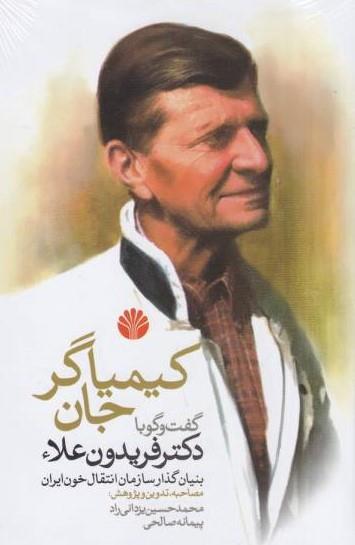
Figure 1. Picture on the cover of the book
Strengths of the book
Among the strengths of the book are the following:
Appendices: One of the strengths of this book is its appendices (288-342). This section includes a number of pictures of influential individuals and personalities from the Ala and Qaraguzlou families, as well as photos of Dr. Friedan Ala in different periods of his life, acquired from his personal archive, which are mostly rare and rarely seen.
References: Observing the precise principles of referencing in the text and at the end of the book again shows the strength of the book. The arrangement of references in the Chicago style at the end of each page shows that the interviewers acted carefully in writing the book and have resorted to specialized research and studies in order to pose their questions.
Research-based: Also, wherever the author saw the need for further explanations, he has addressed it in the footnotes or introduced the relevant sources to the reader for further study; as mentioned above, this is based on the author’s specialized research.
Bibliography: The book’s sources are carefully categorized, reflecting the depth of documentation of the book’s contents by its authors. Given the scarcity of sources in this regard, it is considered a novel and innovative work. The interviews, findings, and descriptions of events are coherently and continuously followed one another, in a way that provides useful and fruitful information to the audience.
Documentation: The book’s bibliography reflects the depth of documentation of the book’s contents by its authors. Given the scarcity of sources in this regard, it is considered a novel and innovative work. The interviews, findings, and descriptions of events are coherently and continuously followed one another, in a way that provides valuable and fruitful information to the audience.
Indexes: The most important key to accessing the content of the sources and the means of retrieving the contents of a book are its indices or its announcement list, which some authors and publishers are unaware of. However, the authors of Kimiagar-e- Jan (The Alchemist of Life) have carefully paid attention to this important matter in their book. They have prepared and arranged these systematic writings on pages 343 to 354 of the book in two sections: an index of persons and an index of places, which makes it easier for the reader to reach their goal.
Conclusion
In the realm of oral and medical history, the book The Alchemist of Life stands out for its straightforward yet insightful storytelling, integrating contemporary historical research and medical advancements. It effectively conveys the contributions of Dr. Fereydoun Ala and his family, offering a well-documented perspective on Iran’s modern history.
Funding
None.
Conflict of Interest
None.
References
- Definition of “Oral History”, 2019. Available at: https://www.nlai.ir/oral-history [Accessed 9 October 2024]
- Nik-Nafs, Sh. S., Salehi Fashmi, P., Mohammadloo, R., Azadeh, F., and Nourae-Nejad, F., 2013. Oral History Manual in the National Archives and Library Organization of Iran. Tehran: SAKMA Deputy of National Documents..
- Yazdani-Rad, M. H., and Salehi, P., 2022. Chemist of the Soul; Interview with Dr. Fereydoun Ala, Founder of the Iranian Blood Transfusion Organization. Tehran: Akhtaran.
